Browsing Category

Sex

Sex

Practice Loving People You’re Attracted to Unconditionally

One of the greatest positive shifts in my relations with women occurred when I learned to have friendships with women I was attracted to, but who were not attracted to me back. Given that I was constantly attracted to women erotically, and only a fraction felt the same way about me, this shift was as important to make as it was challenging.

It is so easy for a man to remain in a “friendship” of unrequited lust in hopes that he might “get lucky” and “one day” she might see “what a great guy I am.” We men get a lot of cultural reenforcement for these hopes too, as the romantic trope of the guy who “doesn’t stand a chance” but who persists in his valiant efforts to “win her heart” in the face of horrible odds, but ends up “getting the girl” in the end, is the plot line of like 75% of all romantic movies and novels.

But a friendship born of persistence in pursuit of a sexual goal is not real friendship–a friendship with an agenda is a farce. And the attraction ends up coming out anyways, in uncomfortable, unwanted and awkward passes that catch the woman by surprise, make her feel manipulated (as she questions whether it was ever a “real” friendship,) and end up in the man feeling bitter about being rejected and having his desires invalidated yet again in his path towards romance and Eros.

Which–since the traditional Courtship Script has assigned men the role of initiators of romantic and sexual interest and women as the responders–has probably been going on since he mustered up the nerve to walk across the dance floor in the gym at the middle school dance, ask the girl to dance, and get rejected in front of all his classmates. Bitterness and resentment spreads all around, for boys and girls, men and women, and all genders.

Is there a way out? This is an urgent question.
Continue Reading

Sex

Understanding the Debates Around “Baby, It’s Cold Outside”

Have you been hearing debates about “Baby, It’s Cold Outside,” and wanting to understand the debate in more depth? I’ve got you covered!

I did a deep-dive on this debate last year. If you just want the net-net (and this is my concurrence with numerous feminist writers I cite, who I think make a conclusive case- not particularly original thinking on my part):

In 1944, when the song was written, it was absolutely unthinkable within “polite society” for a woman to spend the night at a man’s house if she wasn’t married to him. If you look closely (and understand the references in their historical context) this is a song about an unmarried pair on a date who want the night to continue at his place, and are coming up with reasons why she should stay over that will be acceptable to the woman’s strict family and nosy community. The song is a cheeky rebellion against what we would now call the “slut shaming” of the era, celebrating a woman’s desire to stay over at a man’s house if she wants, family and slut-shaming community be-damned.

All that said – and this is more my commentary/opinion now: the culture has changed enough in 75 years (thankfully) that what was once a cheeky rebellion against socially-conservative slut-shaming, now when heard in a ~2020 context – perpetuates tropes that play into what we see as rape culture today. Namely, the idea that, in order to defend her public virtue, a woman needs to hide her desire to sleep with a man casually and say no at first out of custom. With that idea floating in the culture, men are more likely to believe women’s no’s are her just playing “hard to get” or putting up “token resistance” in order to not seem “easy” – thus disbelieving those no’s and not taking them at face value.

Continue Reading

Sex

The Consent Pledge

The Consent Pledge
(for men who have sex with women)

I’m a man, and by signing here, I am publicly making this “Consent Pledge” going forward:

I commit to making sure all my sexual encounters are fully consensual. I commit to getting a clear verbal or non-verbal “yes” from my sexual partner(s) before sexual escalation. I commit to not pressuring her to say “yes,” to stop if she says “no,” and to ask if I’m unsure. I commit to stopping if–in my most honest assessment–I don’t believe that she is sober enough to give full consent.

Guys–sign the Consent Pledge here.

Continue Reading

Sex

Beyond the Courtship Script: “Baby, It’s Cold Outside” and the Ironies of Contemporary Sexual Morality

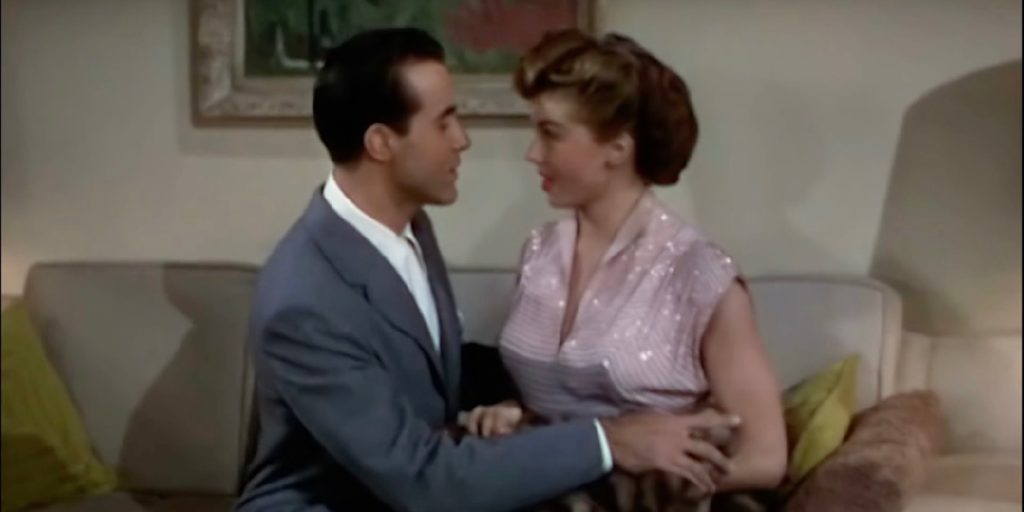
(Screen shot from the first film interpretation of “Baby, It’s Cold Outside,” in “Neptune’s Daughter,” 1949)

The “Courtship Script” is a set of assumptions–with a long history and widespread social acceptance–about how heterosexual men and women go from being strangers, to lovers and/or long-term romantic partners.

In its most basic and caricatured form, the Courtship Script goes something like this: Boy meets girl. Boy desires girl. Boy chases girl. Girl may or may not desire boy back, but either way, she rejects his advances, and “plays hard to get.” Boy persists in hot pursuit, in the face of seemingly insurmountable odds. Eventually, girl gives in to his devotion, submits to his penetrating desire, and surrenders to the love/sex she actually wanted all along.

There’s no question that many men and women find some version of this basic Script “hot” and “romantic.” There’s also no question that it flies in the face of the new standards of consent—sometimes called “yes means yes” or “affirmative consent”—that are fast becoming consensus on the liberal side of the political spectrum.

What happens when a newly-evolving standard of consent flatly contradicts widely-held notions of romance and eroticism? Do we de-prioritize romance, sexual tension, seduction and eroticism (which I refer to loosely as “Eros”) in the name of safety? Or do we develop new notions of Eros that fit with our evolving standards of emotionally-safe, non-coercive sex? And what do we do about the fact that, for thousands of years, it was precisely the unsafety of Eros–its adventure, forbidden temptation, wildness, unpredictability, tension, and transgression–that made it so damn hot?

I don’t believe there are easy answers to any of these questions. I do believe, however, it’s crucial that we start discussing them more widely.

***

There is perhaps no better entryway to understanding the Courtship Script, and the problems with it from a consent perspective, than by examining the annual controversy that occurs—right around this time of year—over the holiday classic “Baby, It’s Cold Outside,” written by Frank Loesser in 1944.

Continue Reading