Persuasive Arts, Lectures, Videos

How to Connect With Powerful and Influential People

At Awesomeness Fest in Playa del Carmen, I delivered this keynote:

[Below is an edited transcript. There is also an audio version available for streaming and download at the bottom.]

[By the way, if–after watching this video–you’d like additional help putting these steps into action, in a way that is relevant and tailored to your particular situation, check out my page “I Will Build Your Network“]

You think you’re here right now for a just little dose of awesomeness. Actually, what you’re here for is a religious conversion. The particular religion of which I’m a missionary—and I’m going to convert every last one of you—is the religion of connecting with powerful and influential people. Everything good in my life has come through this power. The most important connection in my life, to my wife Jena, came through a mutual connection. My book deals have come through connections. Most of what has happened in my business life has come through connections. I’m going to share some secrets with you that are going to “super sauce” this power in your life.

There’s one really important distinction you have to understand if you want to be good at this skill, and bring all the benefits that I’ve already mentioned into your life. It’s a distinction between two types of networking: the “right” way, and the “wrong” way. My guess is that a lot of you are unconsciously networking the wrong way, because a lot of people do this.

Continue Reading

Lectures, Videos

Your Competitive Advantage is Not Information, It’s Transformation

Of all the talks I’ve ever given, this is, in my judgment, the best.

At Jazz @ Lincoln Center, speaking to the students of the Institute for Integrative Nutrition:

[Below is the edited transcript. An audio version is available for download at the bottom]

If you are a thought leader, trainer, coach, or service provider of any kind who shares with an audience or works or with personal clients, you are in the midst of a storm right now.

There’s a very powerful competitor out there trying to put each and every one of you out of business. This is an extremely well-funded competitor. I just checked their market capitalization. It’s around $230 billion. Everyone has heard of them. Everyone uses them. People have access to it on their computer and in their pockets or phones. Pretty soon it’s going to be driving your cars. It’s even going to be on your eyeglasses. If you haven’t guessed, I’m talking about Google.

We live in an age now where information is abundant, cheap, and free. If you are going to compete by providing information to your clients, you will lose. Competing with Google is a losing proposition. Often you’ll hear the distinction made between information and knowledge. There’s so much information out there, but what we really need is knowledge. Google has us beat here because they have videos. They own YouTube. Anyone can get the information distilled in any way they need. They can get all the concepts they need for free. Just flip on TED or go to YouTube. It’s all there.

This sounds a little depressing. How can you compete with this behemoth that is making all of the world’s information free and available to everyone? The answer is that your competitive advantage is not information. It is transformation.

Continue Reading

Self-Education and Self-Investment

How to Hack Your Education: A Conversation With Dale Stephens

imgres-1These days, the “cool kids” at school don’t cut class and smoke weed in the back alley behind the school, like they did back when I was in school…

These days, the cool kids drop out, say F.U! to tens or hundreds of thousands in student debt and bloated tuition bills, start companies, and build lives for themselves, on their own terms, long before parents and professors tell them they now have “permission” to be adults.

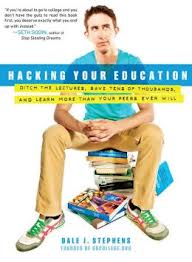
Listen here to a special call I did with Dale Stephens, author of the new book from Penguin, Hacking Your Education: Ditch the Lectures, Save Tens of Thousands, and Learn More Than Your Peers Ever Will

Dale Stephens is a Thiel Fellow, has been featured in every media outlet you could imagine, and is the founder of UnCollege.org. He and I were both featured in the New York Times Sunday Styles article “Saying No to College,” and we shared the stage at TEDxSF on the failure of the higher education system.

Dale is an expert on the new youth-led alternatives that are now popping up like flowers amidst the college loan wasteland that parents have made of their children’s lives (parents have done this by foisting on children outmoded, out-of-touch, retrograde notions of education.)

Screw debt and five-figure tuition bills: get educated on your own, says Dale. Listen as we take this issue head on, and teach you real-world skills for educating yourself, the secret methods that out-of-touch parents, teachers, and professors don’t want you to know about, because they fly in the face of every bureaucratic notion that the older generations still rally around like lemmings jumping off the Titanic.

This recorded call is for you if:

  • You are a parent or prospective parent (Listening to this call may save you hundreds of thousands of dollars in college tuition that you won’t need to save for- and it may save your child from becoming a victim of indentured student-hood, via our nation’s broken and bloated perpetual student debt fiasco.)
  • You are thinking of plunking down hundreds of thousands of dollars on a graduate education. (HEAVEN’S NO! THIS CALL MAY SAVE YOU!!!)
  • You are currently a college student and want to learn how to get the most out of your student years, for the least amount of money.
  • You are currently a student and are thinking of getting the hell out of dodge, and joining all the other cool kids, by saying “No thanks” to your parents’ antediluvian ideas about education.

Listen to the call below. 

And, while you’re at it, order a copy of Dale’s great new book Hacking Your Education.

Self-Education and Self-Investment

How to Deschool Your Mind: A Controversial Dialogue With Dale Stephens & Michael Ellsberg

School is not inherently bad —but an exclusive focus on formal schooling as your only education, in the absence of real-world street-smarts, almost always is.

Listen to me in a teleconference with Dale Stephens, founder of Uncollege.org and “Chief Educational Deviant” of the Uncollege movement. This movement is liberating young people from constrictive views—foisted upon them by parents and  teachers—about how they should educate  themselves.

How to Deschool Your Mind: A Dialogue With Dale Stephens & Michael Ellsberg
You can listen to the audio of the call below.

Continue Reading

Self-Education and Self-Investment

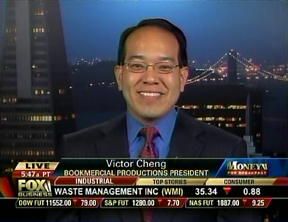
What They Don’t Teach You at Harvard Business School: A Dialogue With Victor Cheng and Michael Ellsberg

Four years ago, I was invited to sit in on a small, private, high-level mastermind led by Victor Cheng, a business growth expert who helps businesses grow from $1 million to $10 million, and from $10M to $100M, who is often quoted by reporters from Fox News, MSNBC, Inc. magazine, Entrepreneur, Forbes, Time, and the Wall Street Journal.

The second Victor opened his mouth and started talking, my jaw hit the floor. It stayed there pretty much for the next several hours (I did eventually shut my jaw, after he stopped talking.) I had never heard such a nonstop blitzkrieg torrent of brilliant, counter-intuitive, specific, street-smart “Why didn’t I think of that??!!” business advice, delivered with such precision, confidence, authority and clarity.

Well, on Thursday, 9/22/11, I had the privilege of sharing his insight for 90 minutes live on a teleconference, on the topic of my own upcoming book The Education of Millionaires (which he’s featured in).

We  had e a free-wheeling, shocking, highly-caffeinated, no-holds-barred, controversial, angry-making dialogue together, packed with counter-intuitive, real-world, street-smart career development, education and and business growth strategies that they DON’T teach at Harvard Business School. It will get you riled up to take your career success to the next level.

Listen below!

–Michael

Here’s some additional info Victor sent to his own list before the event – “straight from the master himself”:

—————————-

Continue Reading

Self-Education and Self-Investment

How to Make Your Work Meaningful and Your Meaning Work: Chapter 1 of The Education of Millionaires

(How to Make a Difference in the World Without Going Broke)

[Note: For the full Introduction to the book, click here.]

A twenty-one-year-old singer, songwriter, and guitarist named David found himself in a hospital in Paris one night, being treated for malnutrition, in 1967. The reason he was malnourished was that he was not making a lot of money and couldn’t afford proper foods, as he played gigs at bars, nightclubs, and dances across France and Spain.

No gig tonight, no eat tomorrow.

Two years before, he was in his sixth form in Cambridge, England (equivalent to the last two years of high school in the United States). David simply stopped going to his A-levels, the series of exams that determine university entrance in the UK. All he really cared about was rock music, and he dove fully into it, playing in local bands and eventually living by his wits, gig to gig, in France and Spain. Had you seen him in that moment in Paris, sickly in the hospital at age twenty-one, lacking funds to feed himself properly, you might not have thought he had made a good choice leaving his A-levels, or that he had any decent prospects in life.

And while that judgment may be correct for most starving artists, in the case of this particular artist—who was starving not just figuratively but literally—such a judgment would be as off the mark as you could get.
David returned to the UK, and later that year, a drummer he knew named Nick Mason asked him to join a little band they were putting together called Pink Floyd. The band went on to sell over 200 million copies of its albums over the next forty-plus years. The Dark Side of the Moon, the band’s most famous album, has sold upward of 45 million copies worldwide and ranks among the greatest-selling, most critically acclaimed, and most influential albums of all time. As lead guitarist, co-lead vocalist, and songwriter for the band that produced so many hits for over forty years, David Gilmour is easily one of the most important musicians in the history of rock.

Continue Reading

Pages: 1 2 3 4 5 6 7

Self-Education and Self-Investment

The Craigslist Test of the Value of a B.A.: Introduction to The Education of Millionaires

[Here is the full Introduction to my forthcoming book The Education of Millionaires. Since this piece is being made available here a month before the book is being released, Penguin has asked me to include the following proviso: “These are unrevised and unpublished proofs. Please do not quote for publication until verified with the finished book.” Thank you. Enjoy! –Michael]

You’ve been fed a lie. The lie is that if you study hard in school, get good grades, get into a good college, and get a degree, then your success in life is guaranteed.

This might have been true fifty years ago. But it is no longer true today.

If you want to succeed now, then you must also educate yourself in the real-world skills, capabilities, and mindsets that will get you ahead outside of the classroom. This is true whether you’ve been to college or not.

This book shows you the way.

Why Practical Intelligence Almost Always Beats Academic Intelligence

A thirty-seven-year-old Harvard MBA and a twentysomething college dropout, the latter a few credits shy of a film and theater degree from USC, are sitting across each other in a job interview. The MBA is wearing a crisply pressed three-piece suit with a yellow tie. The twentysomething is wearing jeans and a pullover sweatshirt, with no shirt underneath. The twentysomething is unshaven, and the state of his hair suggests that not much grooming had occurred between his departure from bed that morning and this interview.

The interview is going very, very poorly. The interviewer is entirely unimpressed with the academic background the interviewee brings to the table, and feels the interviewee doesn’t have enough experience to provide tangible value in the chaotic environment of a real-world start-up.

Continue Reading

Pages: 1 2 3 4 5 6